



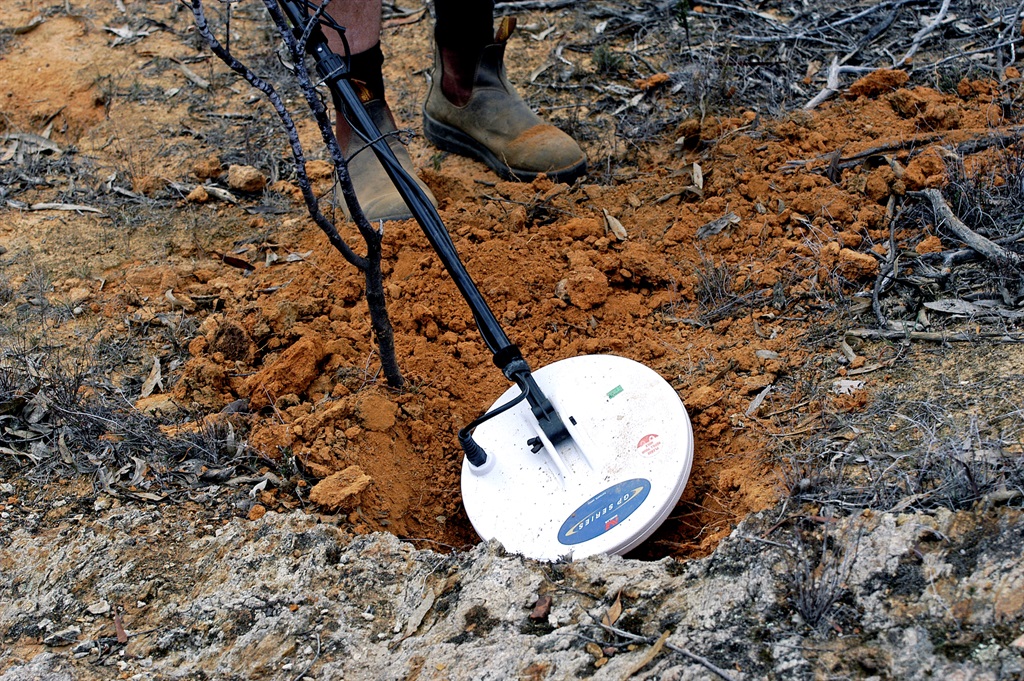
Gold has fascinated humanity for thousands of years. From the California Gold Rush of the 1800s to the modern-day deserts of Australia, prospectors have always searched for better ways to uncover this precious metal. One of the most important advancements in gold hunting came with the invention and continuous improvement of the gold nugget metal detector.
This article explores the journey of gold nugget detectors — how they began, how they advanced, and where they are today.
Early Prospecting Methods (Pre-1900s)
Before detectors, prospectors relied on simple tools like pans, sluices, and picks. Gold was usually found in rivers, creeks, and shallow deposits by physically separating it from dirt and gravel. The process was time-consuming, exhausting, and heavily dependent on luck.
Key limitation: There was no way to “see beneath the soil” to find hidden nuggets.
The First Metal Detectors (1920s–1940s)
- Early metal detectors were large, bulky devices primarily used for industrial applications and landmine detection during wars.
- They worked on the principle of electromagnetic induction, but lacked sensitivity and accuracy.
- At this stage, they were not designed specifically for gold prospecting.
Impact: They laid the foundation for what would later become hobby and treasure-hunting detectors. Learning to find gold nuggets with metal detector efficiently is key for both beginners and pros.
Rise of Hobby Detectors (1950s–1970s)
- As technology improved, smaller, portable detectors became available for public use.
- These early hobby detectors were mostly designed for coin and relic hunting, but some prospectors adapted them for gold searching.
- Problem: They struggled in mineralized soils (common in gold regions) and often mistook iron for gold.
Example: The BFO (Beat Frequency Oscillator) detectors of the 1950s, though primitive, were among the first accessible tools for treasure hunters.
The Gold-Specific Detectors Emerge (1980s–1990s)
- Manufacturers began designing detectors specifically for gold prospecting.
- VLF (Very Low Frequency) technology became popular because it allowed for higher frequencies, making detectors more sensitive to small gold nuggets.
- These detectors offered features like manual ground balancing, helping reduce false signals in goldfields.
Example: The Fisher Gold Bug, released in the late 1980s, became a favorite among gold hunters for its sensitivity to small nuggets.
The Pulse Induction (PI) Revolution (1990s–2000s)
- PI detectors transformed gold prospecting by handling highly mineralized ground far better than VLF machines.
- They could detect larger nuggets buried deeper underground, though they were less sensitive to very tiny flakes.
- This innovation opened up previously “unsearchable” goldfields.
Example: Minelab’s SD and GP series in the 1990s–2000s revolutionized deep nugget hunting, especially in Australia.
Modern Gold Detectors (2010s–Present)
Today’s gold detectors combine power, precision, and usability like never before. Features include:
- Multi-frequency technology (e.g., Minelab Equinox 800) for versatility in different terrains.
- Automatic ground balancing and noise cancellation for easier use in mineralized soils.
- Lightweight, ergonomic designs for long detecting sessions.
- Waterproof coils and bodies for stream and river prospecting.
- Advanced digital displays showing target IDs, depth estimates, and customizable sensitivity.
Example: The Minelab GPZ 7000 introduced Zero Voltage Transmission (ZVT) technology, pushing depth detection beyond traditional PI limits.
The Future of Gold Nugget Detectors
- AI integration may allow detectors to learn and filter targets more accurately.
- Wireless systems with smart glasses or AR interfaces could guide prospectors visually.
- Improved battery life and portability will make detectors even more efficient in remote areas.
From bulky, unreliable machines to today’s advanced, gold-specific devices, the evolution of gold nugget detectors has transformed how we prospect. Modern technology allows hobbyists and professionals alike to find gold more efficiently, whether it’s tiny flakes or massive nuggets buried deep underground. As detectors continue to evolve, the future of gold prospecting looks brighter than ever — promising even greater chances of uncovering hidden treasures.
